Fashion Is Political: Prada
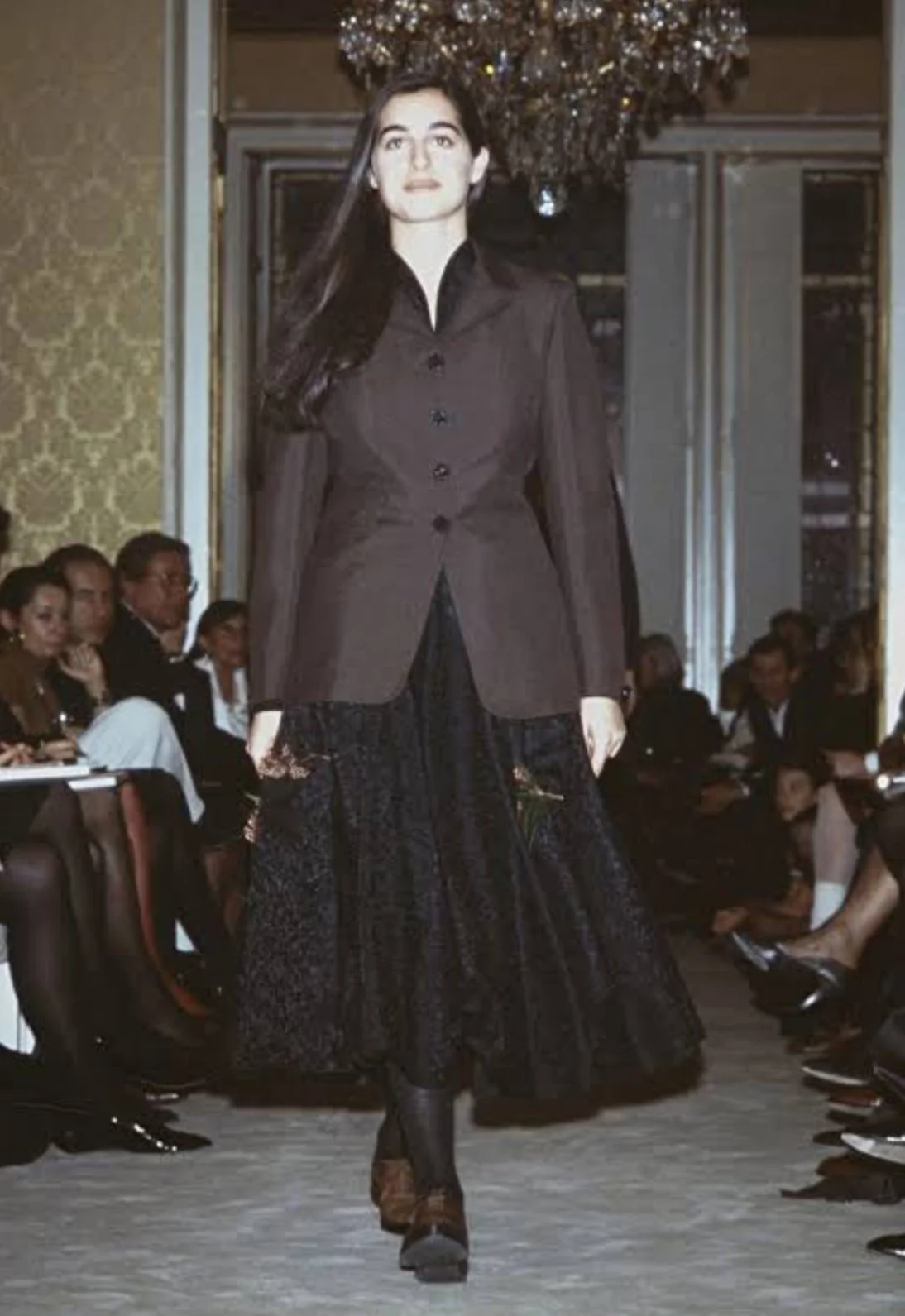
Prada 1988, Exit 17/53
Shot by Albert Watson
Nothing escapes the scope of politics; people are often quick to disregard politics and how
they intersect with every part of life, down to your food, resources, who you marry, and even what you wear. Sure, there are mountains of art inspired by political movements, civil rights, LGBTQ+ rights, etc. But fashion is always seen as a shallow interest that only affects your day-to-day life and wardrobe, yet what you put on your body, what is designed, and what is brought to the public is always political.
Muccia Prada is an excellent example of this; the iconic Prada designer has a political science degree, is a known communist and feminist, yet many like to pretend that fashion is this beautiful bud of roses, away from the “muck” of politics.
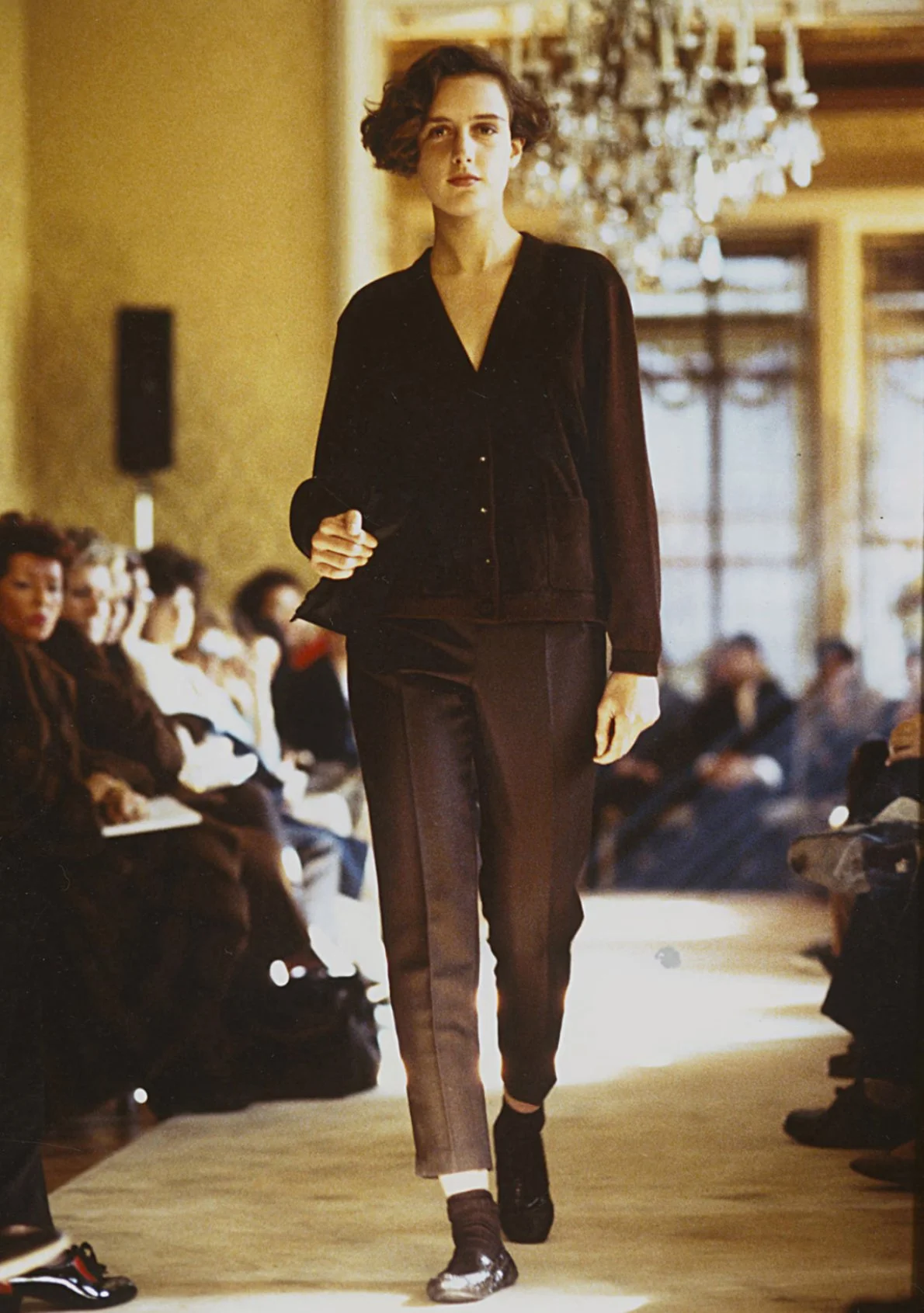
Prada Fall 1988, from the catwalk Exit 3/53
Shot by Albert Watson
Muccia enjoyed politics, and her Fall 1988 collection featured 70 pieces meant to showcase classic, expensive elements. At the time, they were known only for leather goods and wanted to switch to clothing and spread the word about this new brand look. At first glance, it is more conservative than the look runway was giving off at the time; the looks were masculine with blazers and trousers.
Everyone, from workers, domestic laborers, to army officials, was represented in the show in an attempt to draw inspiration from northern Italy in the 50s.
Note: While there is a lot of differences also politically and socially at the time with northern and southern italy that is vital to note I would suggest doing greater research into that aspect because I dont believe I can explain it in as much depth as I would like to, but for reference Muccia was from the northern part of italy which was supposedly more “respected.”
This is where we get into fascism and its intersection with fashion, specifically Prada. To give a quick rundown of Italian history at the time. Benito Mussolini was, according to the BBC, “the founder of Fascism and leader of Italy from 1922 to 1943. He allied Italy with Nazi Germany and Japan in World War II.” His ideals held that inequality was necessary for Italy. Through class cooperation, Italian workers were told that their individuality did not matter, that they were reduced to hard labor by the state.
According to Bliss Foster, the YouTuber, I got the idea to write this from “Muccia is taking high and low class elements of Italian society and integrating them into the world of her collection…Muccia is giving the finger to Mussolini and class cooperation as a concept.”
The collection was a way to show how there is community and unity between workers, not in the way they must struggle, but that they must be equal. She was trying to highlight the beauty and importance of many careers.
This was done in a much more subdued way; there were many double antandras, like an all-black look similar to Mussolini's military uniforms, “the black shirts.” Showing black shirts, black hats, and ties, it played a crucial role in this part of the military hierarchy.
Muccia drew inspiration for years, drawing on historical elements and incorporating them into other collections. Many people tried to describe her collections as pro-fascist; however, this is not the case. There are so many compelling looks inspired by the era, but the patterns she used transcended into fashion. Showing military jackets for their masculinity and tailoring them to fit into classic, feminine, and nuanced designs.
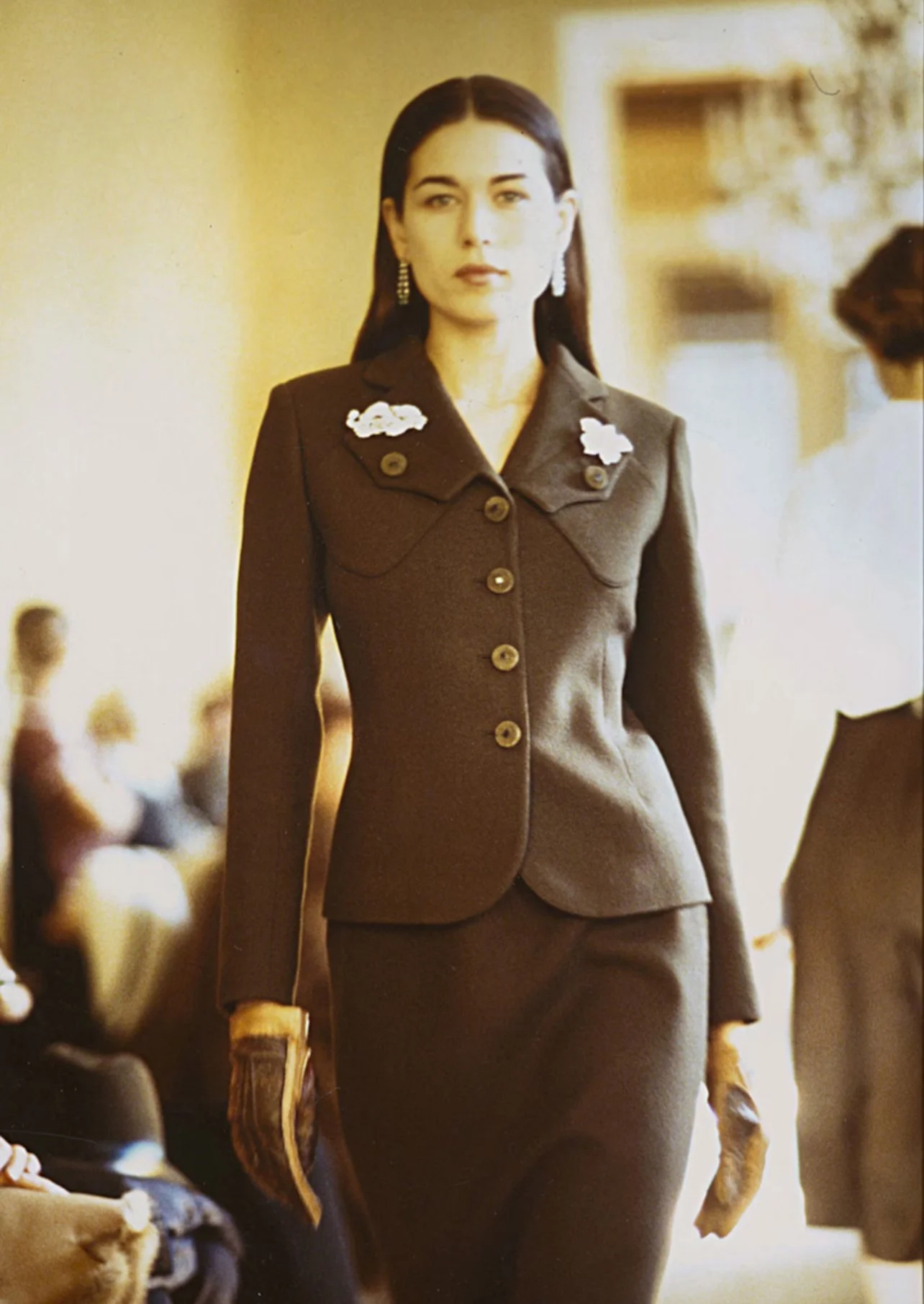
Prada Fall 1988, from the catwalk Exit 11/53
Shot by Albert Watson
They made uniforms. Not only military but also inspired by working-class people, real stories in Italian film, and restrained uniform looks.
During the war, there was also strict control over women’s fashion in Italy; Musallini even went so far as to create “The Ente Nazionale Della Moda.” This was used to impose rules on women’s fashion, creating strict guidelines for how they should position themselves within the patriarchal society he deemed they belonged to.
According to The Fashion Fascisti: Mussolini’s Design for the ‘New Italian Woman,’ “The New Italian Woman was to be the model of femininity as represented by the body-emphasizing cuts of knitted sportswear, and she would accept her place in the patriarchal family, bound up in the hand-tatted lace and embroidered aprons of traditional matronly attire. During this time, emphasis was placed on physical fitness, and the sports fitness fashion industry developed, including gymnastic, swimwear, and other sports-related clothing. In 1939, Mussolini himself organized ‘The Great Parade of the Female Forces,’ a spectacle of feminine Fascist solidarity that was filmed.”
Rooms full of men sat around and wrote what they decided was deemed pretty, worthy, and feminine. Even going as far as to change the names of French phrases in fashion to Italian. Mussolini controlled many parts of the government, but image is a massive part of political control that many seem to neglect. The reason they instituted this can also be attributed to the invasion of Ethiopia four years before the war, which made it extremely difficult to trade and sell goods abroad with Italy. They could also not bring in clothing and food, so this made Musallini more popular with people by spinning this lack of resources into an act of bravery and Italy standing alone.
They were pushing Italian beauty standards and Italian textiles, and during WW1, many women began dressing for comfort as they took on more jobs at home while men were off at war. This began to be vilified, and it emphasized that women should return to their feminine roots.
There were even announcements of what the perfect woman was, from their weight, height, and clothing. I would strongly recommend Bliss Foster's video on this topic, as it is much more detailed.
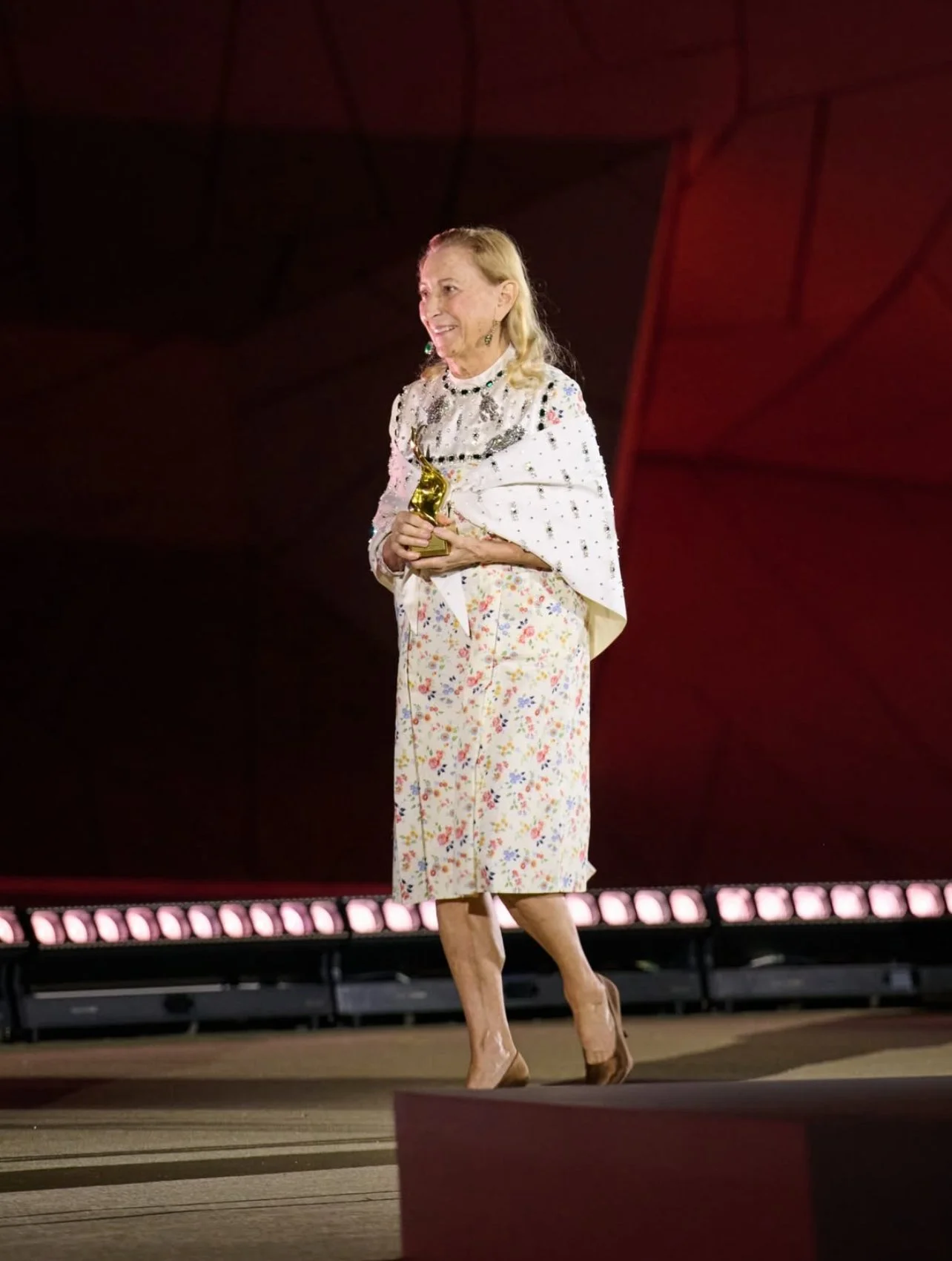
Miuccia Prada receiving the Lifetime Achievement Award at the Fashion Trust.
Later, when Muccia launched Miu Miu under her childhood nickname, you can see the beautiful femininity, childlike wonder, and fun in her designs. She wore beautiful colors, which she claimed she wasn’t able to wear as a child, and even now, knowing this, I look at Miu Miu in a different light.
And this is not the only example of showing anti-fascism in fashion; it is not even the tip of the iceberg of where fashion and politics intersect.
And to my readers who have not heard from me in a bit, I would like to say sorry. My degree, jobs, and other writing opportunities have led me astray from the love I have for writing so personally. However, I have a schedule for the following few articles, and I want to put my all into everything I do.
Thank you for reading, and please subscribe to my newsletter! Also, please make sure you are confirming your email!
Xoxo,
-Khaurafab